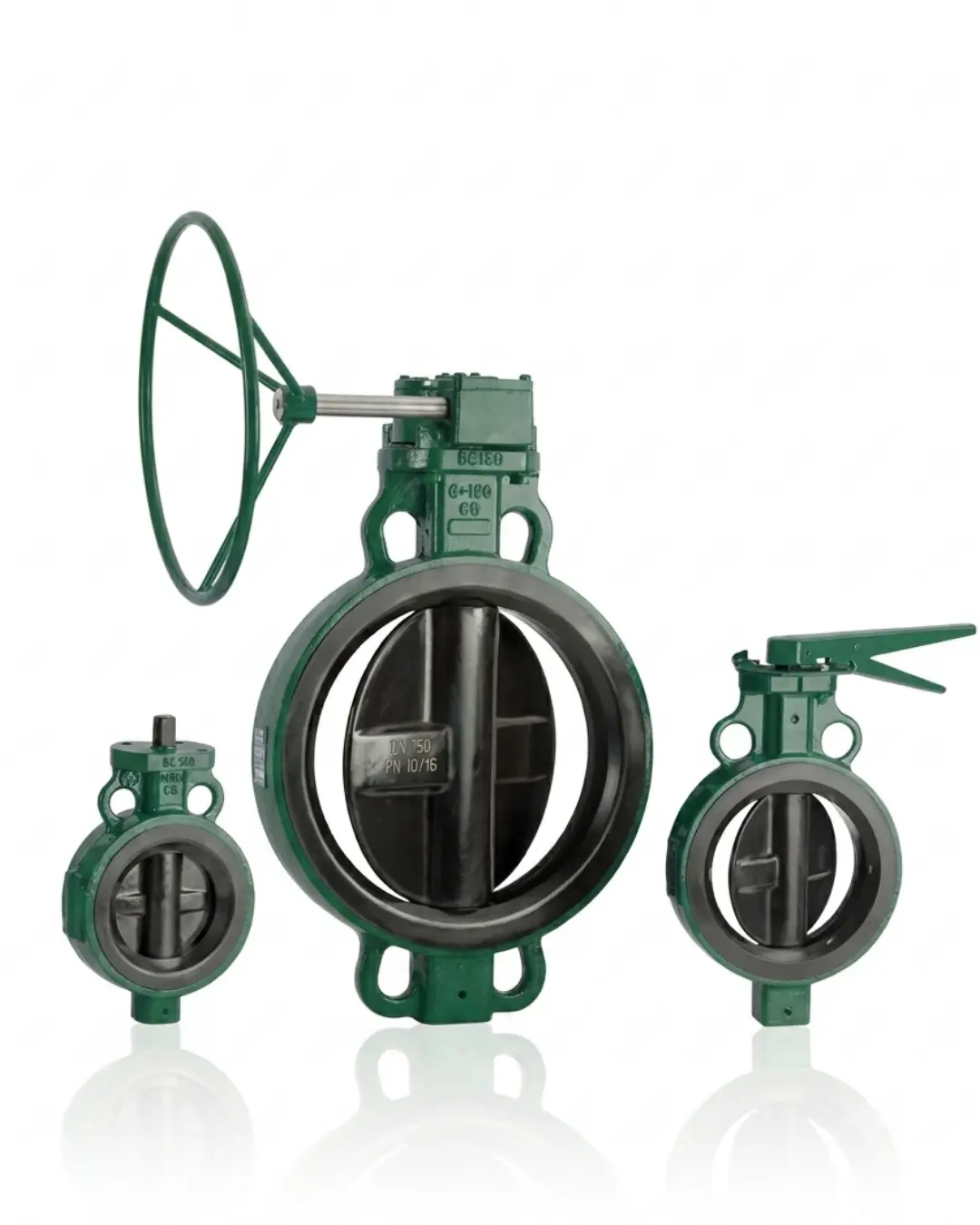
L&T Aquaseal Butterfly Valves
L&T Aquaseal Butterfly Valves: Technical Specifications, Features & Variant Comparison
|
Feature / Parameter |
Standard Aquaseal |
Aquaseal Plus |
|
Pressure Class |
PN10, PN16 |
PN20, PN25, ASME Class 150 |
|
Body Construction |
Cast Iron, SG Iron |
Cast Steel (WCB), Stainless Steel (CF8 / CF8M) |
|
End Connections |
Wafer |
Wafer, Lugged, Flanged |
|
Target Application |
Municipal water, HVAC, utilities |
Heavy industrial, power plants, hydrocarbon/chemical processes |
Key Engineering Highlights
- In-Situ Moulded Elastomer Seat: High-temperature, high-pressure vulcanization bonds the rubber liner directly to the valve body interior. This eliminates seat distortion, tearing, or unseating during high-velocity flow.
- Blowout-Proof Shaft Design: Engineered with a heavy-duty single-piece stem design featuring internal retention mechanisms to prevent shaft ejection during extreme pressure surges.
- Low Torque & Extended Life: Reduced disc friction against the vulcanized liner lowers operating torque, enabling the use of smaller, more cost-effective actuators.
- Optimized Disc Profile: Contoured disc geometry maximizes flow coefficient ($C_v$) while keeping pressure drop across the valve to an absolute minimum.
Elastomer Liner Selection Matrix
- Nitrile (Black / Food-Grade White): Water treatment, oil-bearing fluids, and compressed air lines (-10°C to 90°C).
- EPDM: Hot water loops, HVAC chilled/condenser circuits, and mild acid/alkali service (-20°C to 120°C).
- Viton / Hypalon: High-temperature process lines, hydrocarbons, and severe chemical exposure up to 180°C.
- Silicon: High-purity food, beverage, and pharmaceutical utility lines requiring non-toxic, odorless performance.
Products Tag :